PCOS
Who May Benefit
My Approach
- Detailed consultation
- Appropriate investigations
- Shared decision-making
- Individualized treatment planning
- Continuous follow-up
Frequently Asked Questions
When should I seek help?
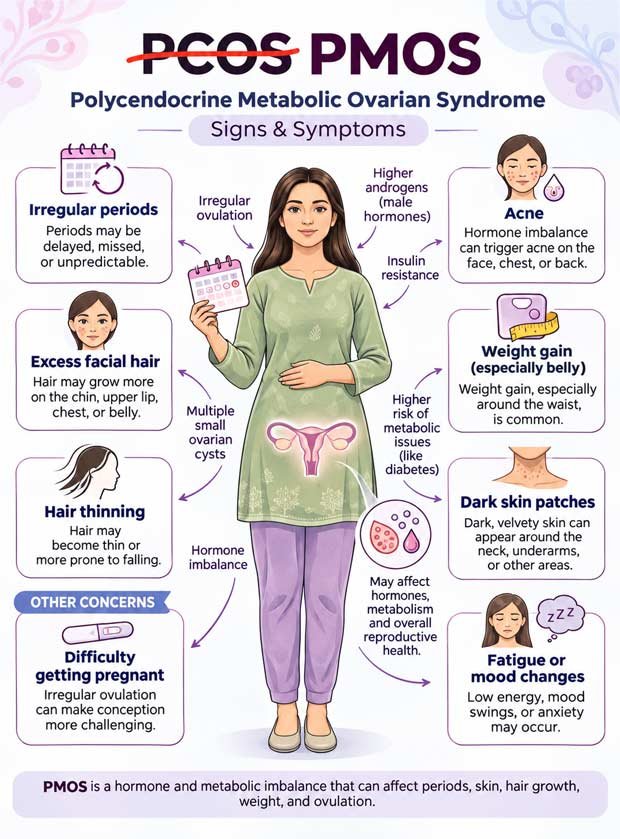
If you have irregular or absent periods, signs of excess androgen (acne, excess hair growth), or difficulty conceiving, it’s worth getting evaluated for PCOS.
What tests are required?
Hormonal blood tests, an ultrasound to look at ovarian appearance, and screening for insulin resistance and thyroid function are commonly used to confirm and characterize PCOS.
Do irregular cycles always mean PCOS?
Not always. Irregular cycles can have several causes, including thyroid problems, stress, and other hormonal conditions, so proper evaluation is important before assuming it’s PCOS.
Is PCOS only seen in women who are overweight?
No. PCOS affects women across all body types. While weight can influence symptoms and management, lean women can also have PCOS.
Can PCOS affect fertility?
Yes, PCOS is one of the most common causes of ovulation-related infertility, but many women with PCOS conceive with the right treatment and lifestyle support.
Why does PCOS cause insulin resistance?
PCOS is closely linked to how the body responds to insulin. Many women with PCOS have some degree of insulin resistance, which can, in turn, worsen hormonal imbalance and ovulation problems.
What are my treatment options?
Options range from lifestyle changes and weight management to ovulation-inducing medication, IUI, or IVF, depending on how PCOS is affecting your fertility.
What can I expect during treatment?
A personalized plan that manages both the hormonal and metabolic sides of PCOS while working towards your fertility goal.